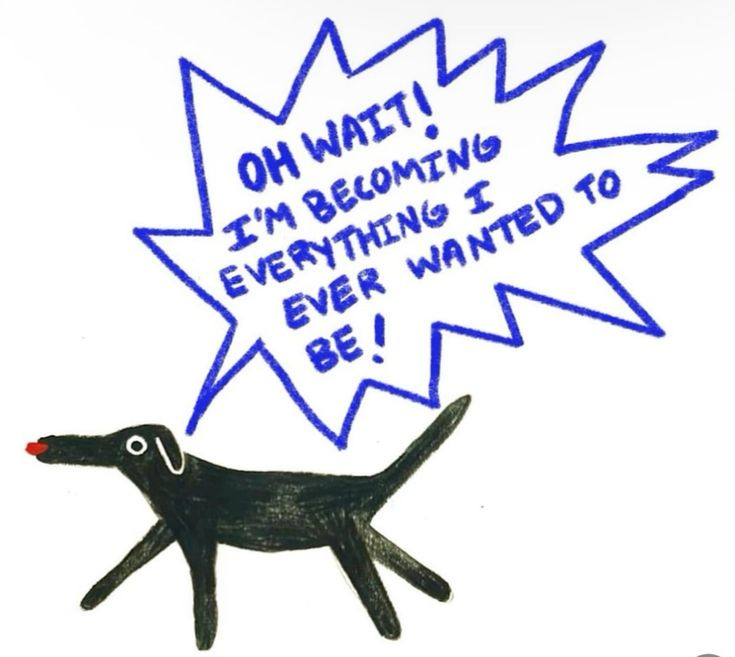
Dear Imposter...I think they're onto us...help.
A dropout's guide to the voice in your head that won't shut up.

Henry Ford has a quote I absolutely love:
If ever I wanted to kill opposition by unfair means I would endow the opposition with experts.
This has always baffled me. Surely… fill it with idiots?? People who look smart but then fail at the first hurdle. What would happen if we filled it with imposters?
People like us?
For me, it started when I was a kid, watching my sisters graduate Oxford, Harvard, Cambridge. In in a room of young adults with ‘real’ jobs and adult degrees, I was holding a plastic cube with 65 buttons and a glass sphere at the end, trying to look at though I belong…
O_o: me.
Imposter syndrome feels like being the plus-one at a party you didn’t even want to go to. Where, you’re holding a drink you didn’t choose, laughing half a second late to a joke you didn’t understand and waiting for the host to clock you and go:
‘Sorry… who are you?’
At the party, you stand there trying to figure out what formation to assemble your hands that suddenly feel like limbs you’re training for the first time.
But professionally, imposter syndrome doesn’t ask you where to put your hands.
It asks you where to put your name: Maybe on the deck? Surely not, it’s not really my place Or should I CC in this email thread?
It asks you if you understand: When you’re sitting in the meeting, doodling like you understand the acronym everyone keeps repeating.
It asks you if you belong?
I’ve had all three. And over the last few years I’ve found a way to deal with it that doesn’t require you to “be more confident”, or whatever people say when they believe our actions are simply a product of our words.
Imposter syndrome has a funny way or viewing the world from your brain. It will tell you…
Wow, this is great.
And in the same breath ask…
But are you?
With my sisters, I remember feeling proud of them, and then immediately feeling ridiculous for making it about me. One second you’re just watching the people you love win, and the next your brain has started ranking everyone in the room, including you.
At 16, I was shooting my school’s marketing images. I’d tell my friends I couldn’t play football because I had “meetings.” Not because I was trying to sound important but because I didn’t know how else to explain that I felt more useful behind a camera.
Then I started shooting weddings. The bride would come and ask me:
’Hey when does the photographer arrive!’
‘It’s me… hello.’
She realises then that she’s hired 12 year old looking 16 year old to shoot the most important day of her life.
Her heart hits the floor.
My pride follows shortly after.
’But fear not’ I reassure her
…as I strap up my velcro geox, put away my spiderman wallet away and slap my ben ten watch into sport mode…
‘I’ll get to work!’
She wasn’t being rude, she was just asking. But those are the moments where your brain starts doing maths you didn’t ask it to do, and somehow you end up smaller than you were five seconds ago.
Professionally, the pattern get’s louder.
I dropped out of university, moved to London, and suddenly found myself in rooms full of the most exceptional creatives, and some of the smartest heads in investment and marketing. If you’ve ever wondered what it’s like to be sat in investor meetings with some of the most talented people in the world as a 21 year old, let me tell you.
It’s an inspiring and lonely place. Inspiring because you’re close to real capability. Lonely because you’re close to it without having any proof you deserve to be there.
So yes, I know imposter syndrome. I knew it well.
But somewhere along the way, this once-foe became something I could use. Not in a cringe “I’m grateful for my suffering” way. More like: I stopped treating it like a sign to step back, and started treating it like information.
So, if any of what I’ve written so far resonates, here’s what’s helped me over the last 5 years.
1) Realise your inexperience is your opportunity
When you feel like an imposter, the instinct is to interpret the feeling as a warning sign. As the host has just walked over and gone.
’Sorry, why are you at my party?’
Inexperience feels like a threat, because you don’t have the usual armour we bind our self worth or status too. No track record to point at, no accolades or reputation. No ‘as per my last email’ to reference or no ‘last time’ to copy.
But having watched some of the most successful creatives and entrepreneurs, I realise now that naivety forces you to do something experienced people can quietly avoid once they have patterns: it forces you to create from a new place.
If you’re naive, you can’t rely on dogma, you can’t hide behind tradition.
The common wording of Henry Forde’s quote is: “if I wanted to sabotage my competition, I would fill their company with experts.”
Experts know so many reasons why something can’t be done, it remains undone. It can turn into a room full of people who know the rules so well they stop making anything new. So, nothing gets risked and slowly the work becomes a copy of a copy of a copy.
Do you copy? Great, let’s keep going.
That usually feels like embarrassment. But it also means you’re not trapped inside the same patterns everyone else is repeating.
2) As you get older, you start living at the boundary of your potential, don’t.
There’s a quiet trap that comes with competence.
You stop acting at the limit of your potential, and you start acting at the boundary of it. The edge where you still feel like “yourself.” The edge where you can perform without having to risk your identity, risk failure.
Here, you stick to what you know works, how you “should” do it. You start defending a version of yourself that is coherent and capable and recognisable.
We think the cost here is failure, obviously, right? But the invisible cost is higher. It’s the price you pay for avoiding the weird, original stuff that only appears when you go past the boundary.
So if you feel naive, if you feel behind, it might be proof you’re out of your depth. Fantastic. Let’s acknowledge that right now you’re exactly where you need to be.
3) It won’t feel like a superpower at first
***Caveat *** that sounds great, but it won’t feel it. Because when you’re in it, naivety feels like being exposed.
You’re going to get things wrong. Again. And then again. You’ll have that thought:
Surely this time they’ll fire me.
And even when nobody says it out loud, you can feel it in your own head, as if it’s being narrated over the room. That voice is what uncertainty sounds like when you haven’t built any evidence yet.
4) Wear shoes that don’t fit
One of the best practical rules I’ve found is simple: find places that pay you to work where the shoe doesn’t fit. Somewhere it’s painful. Somewhere you get blisters.
Then, over time, grow into them.
Wear them in, walk some miles. Learn. Develop. Get it wrong in ways that don’t kill you. And just as the shoe starts to fit, just as you become an ‘expert’, find ways to keep them big.
5) Evidence is the antidote to inexperience
If you feel like an imposter, you are probably trying to argue your way into safety. But certainty is not the entry fee, evidence is.
That bride didn’t stop doubting me because I said the right thing, she stopped doubting me because I did the job; the photos arrived. I gave her evidence. I gave myself evidence too.
That is the whole game; collecting evidence.
This is why, “just think differently” never lands when you are stood in the room with your name on the deck and your stomach doing backflips. The old story in your head is not being stubborn, it is being logical. It is asking for proof.
Imagine you’re brain being logical for a second.
Have you jumped out this plane before?
No.
Okay here’s cold sweats, nausea and a minor heart attack.
You may not be jumping out of planes. But maybe this is the loop you’re in.
The feeling shows up. You do the quick scan. You start building a case for why you do not belong. You fire little bullets at yourself all day: They hired the wrong person. You are behind. You do not understand. Someone is going to notice.
Evidence is the silencer. It is the email you sent that did not get you exposed. It is the meeting you survived or the work that arrived.
And slowly, without a big Marty Supreme moment, the pattern changes. New evidence creates a new belief. The new belief creates a new action. The new action creates more evidence.
That is why I keep saying imposter syndrome is a compass. If you want growth, that feeling is often proof you are exactly where you need to be.
But if you want progress, you need movement. Keep moving. Keep executing. Keep collecting evidence.
And maybe soon enough, you become the ‘expert’ you always dreamed of being ; )
Speak soon,
Will xxx